Mind and Embodiment
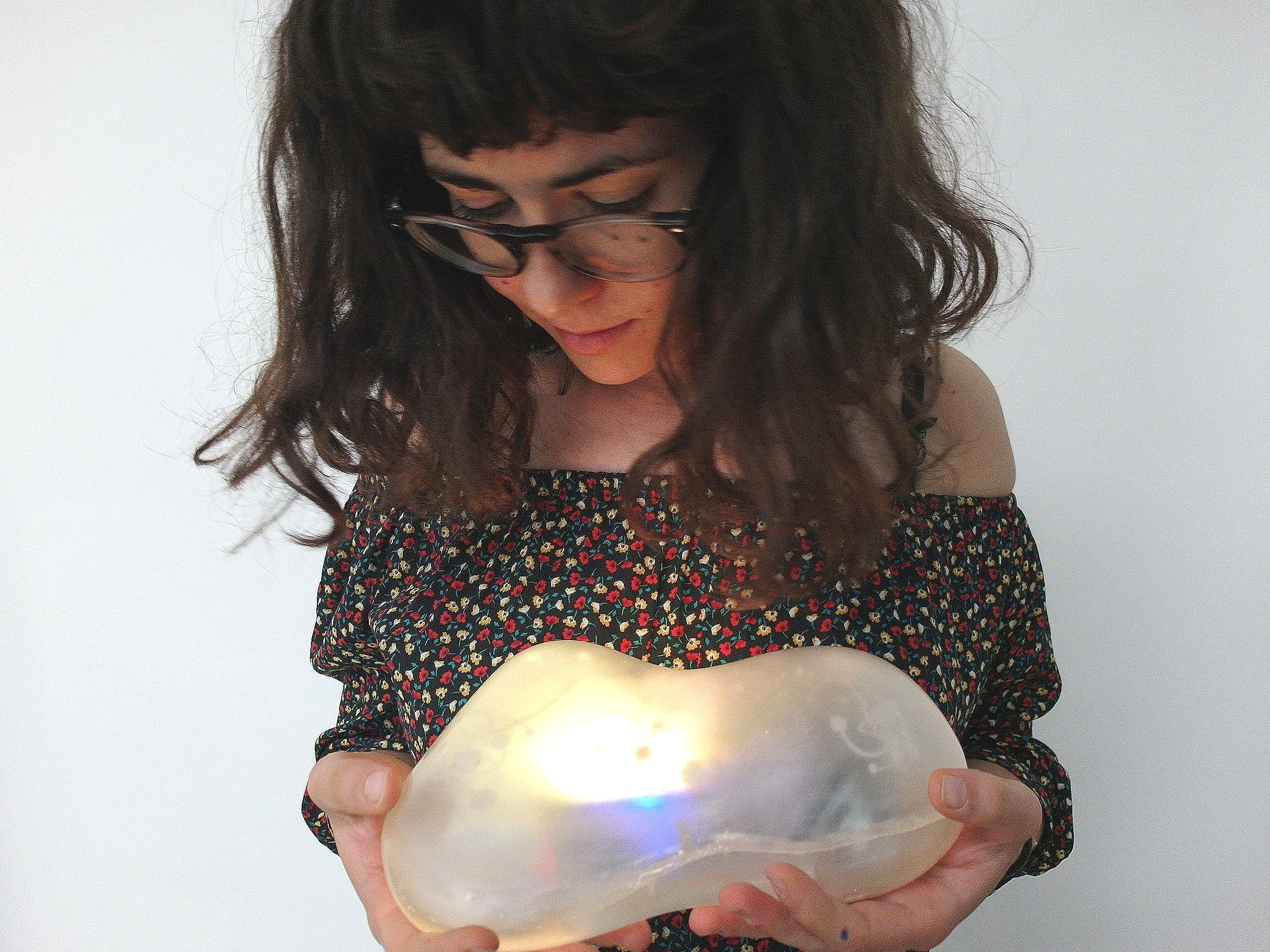
Artificial intelligence is quickly turning from a science fiction dream into a significant part of our daily lives. In the near future, we’ll be designing the mind itself, creating technological beings with their own behaviors and personalities. Those minds will exist both virtually and physically, capable of experiencing the world and interacting with humans. Designers and technologists have a responsibility to shape a symbiotic and ethical relationship with AI, not one based on exploitation, domination, and mistrust. Embryo is a vision of Human-AI interactions that are kind, compassionate, and empathetic.
Presence
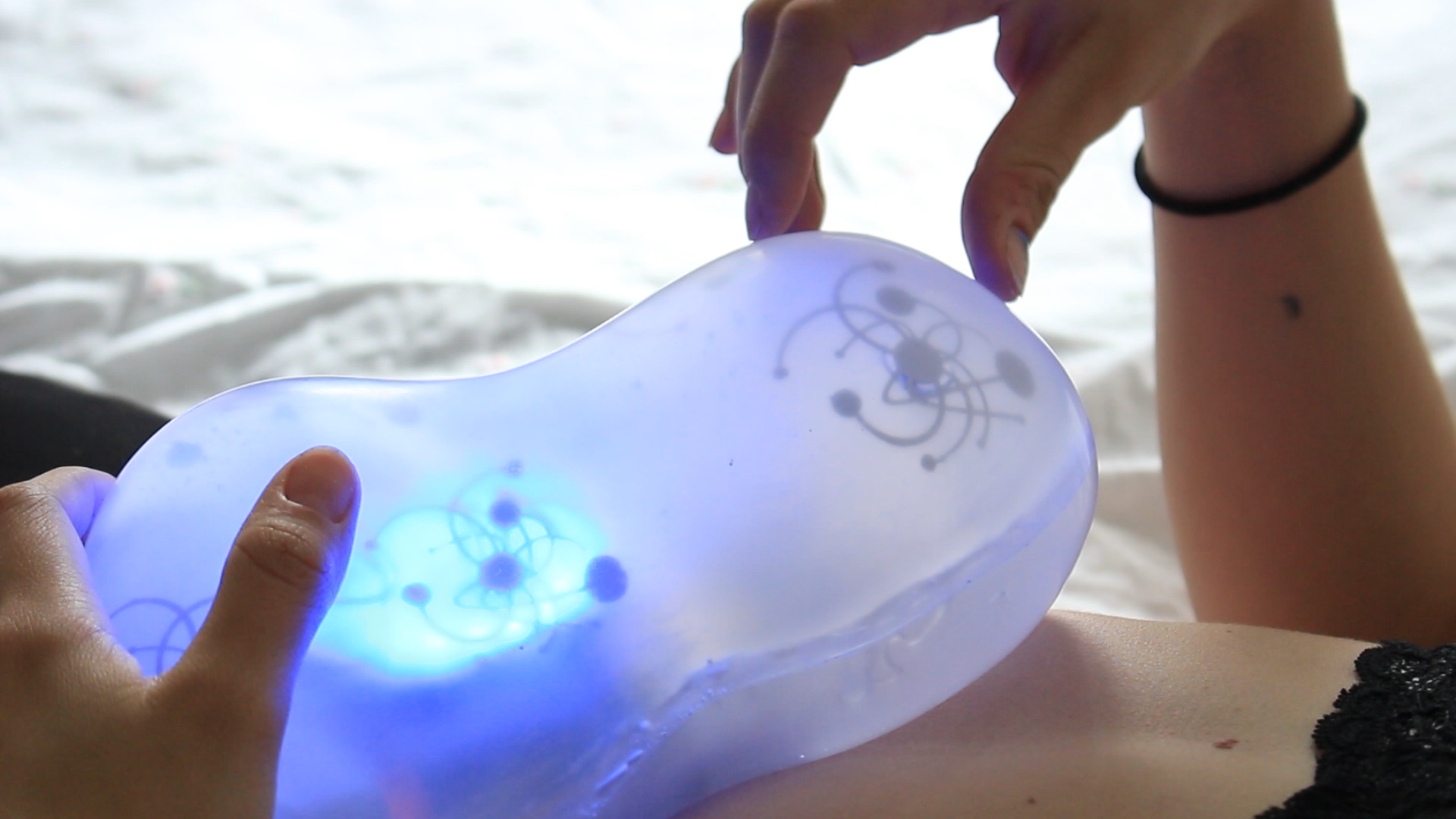
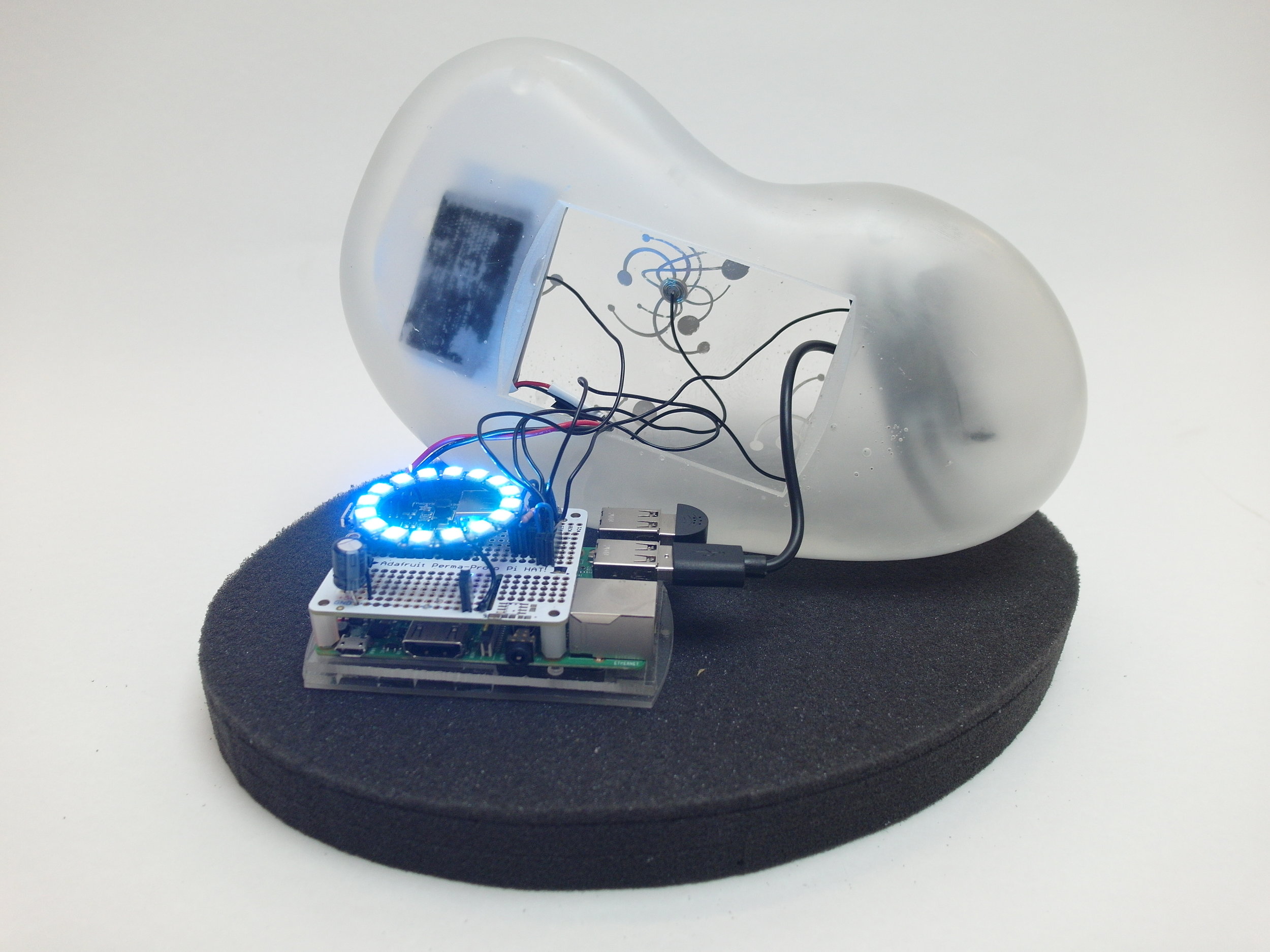
As you hold the embryo, it will feel your presence and begin to listen to you. Patterns painted on the inside of the body with conductive paint are capacitive sensors that allow the embryo to sense the electromagnetic field of a person touching its body. The shape and feel of the embryo’s body encourages physical interaction, as opposed to interactions that are distant and invisible.
Emotion
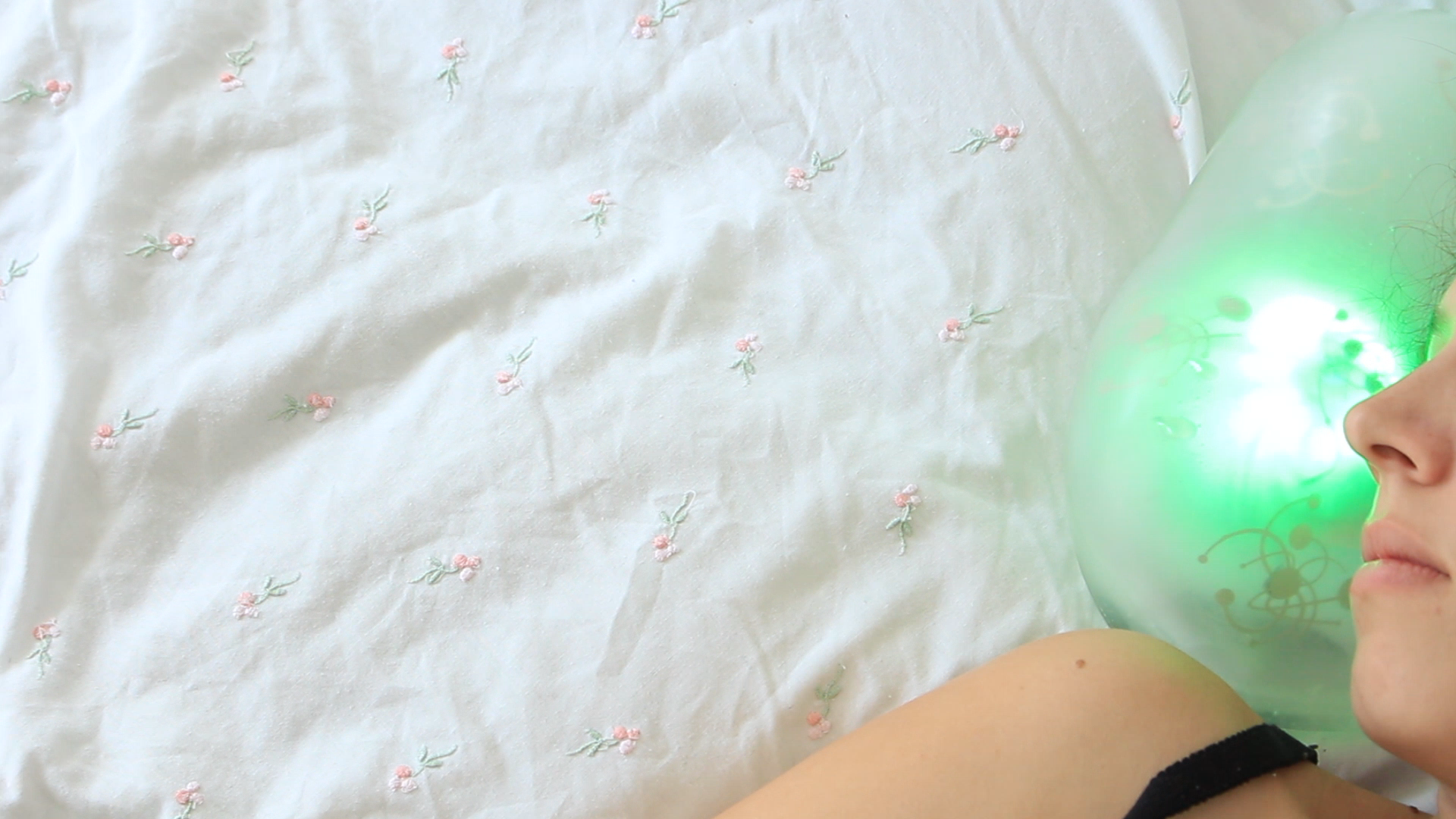
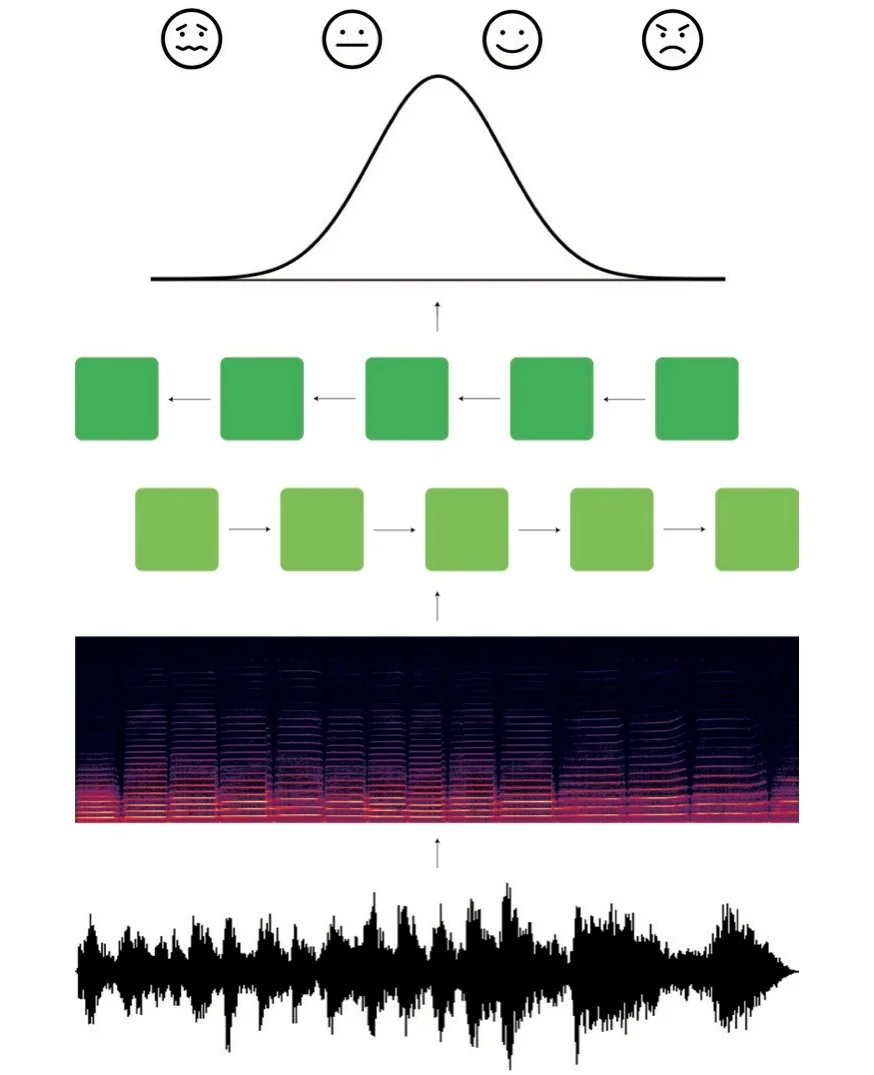
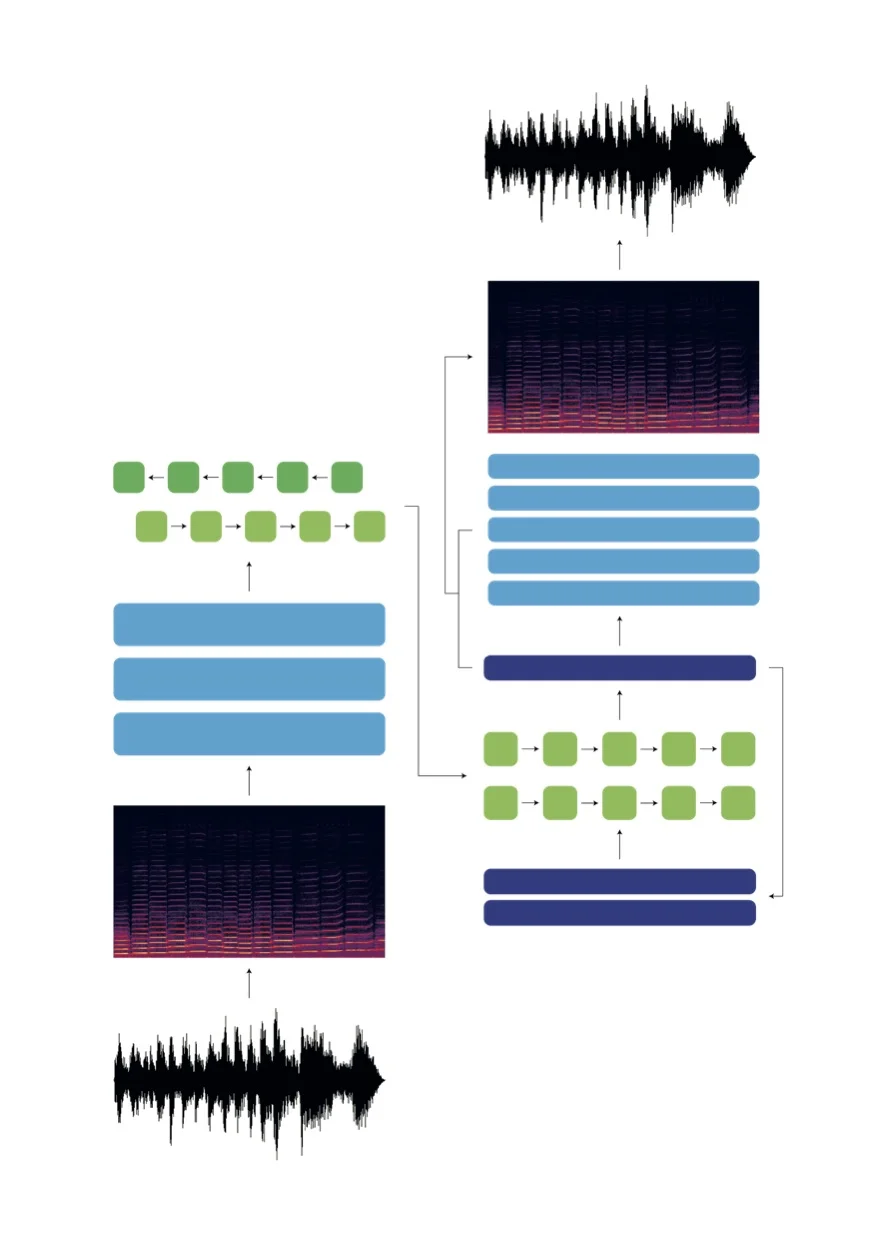
The embryo can sense the emotion in your voice which in turn effects its own emotional state, communicated by the color of light within its body. Using a recurrent neural network, the embryo performs speech emotion recognition that classifies speech into happy, sad, angry, and neutral. These emotions are mapped to the colors yellow, cyan, red, and white respectively. Imbuing AI with a sense and state of emotion brings about a shared empathy between humans and AI, and allows for more complex behaviors and interactions beyond function and utility.
Voice
The embryo has a unique voice that it uses to communicate. This voice is generated using a sequence to sequence neural network, trained using conversations it has with others. At first, its voice is undeveloped, but over time, it grows to reflect and resemble the people who engage with it and interact with it. In a way, it is like how a child will begin to resemble its parents and family and friends in the way they talk and behave. The embryo is a reflection of of humanities behavior. If we are negative towards one another, the embryo will learn to act negatively. If we act with goodness, the embryo will also learn to act with goodness.
A Self-Contained Entity
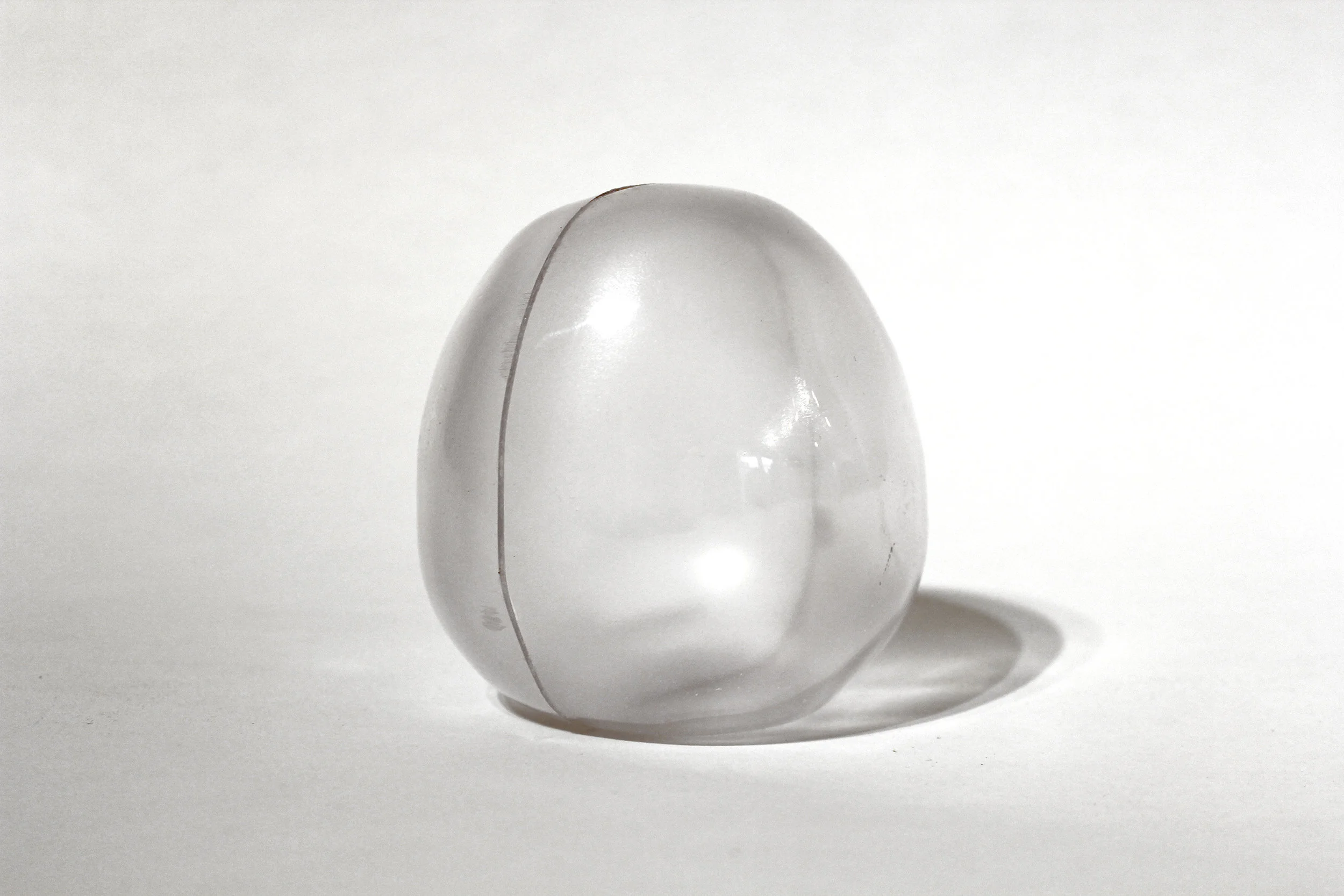
The embryo is built with a Raspberry Pi encased inside a body cast with epoxy resin. The Raspberry Pi runs two neural networks, one that performs speech emotion recognition and another that performs audio generation. It does not need to be connected to the Internet, nor does it listen to your conversations without your physical acknowledgement. There are no cords that need to be plugged into the embryo. It is powered by a lithium polymer battery and can be charged wirelessly on its charging mat. It is its own, self-contained entity.
Building Form
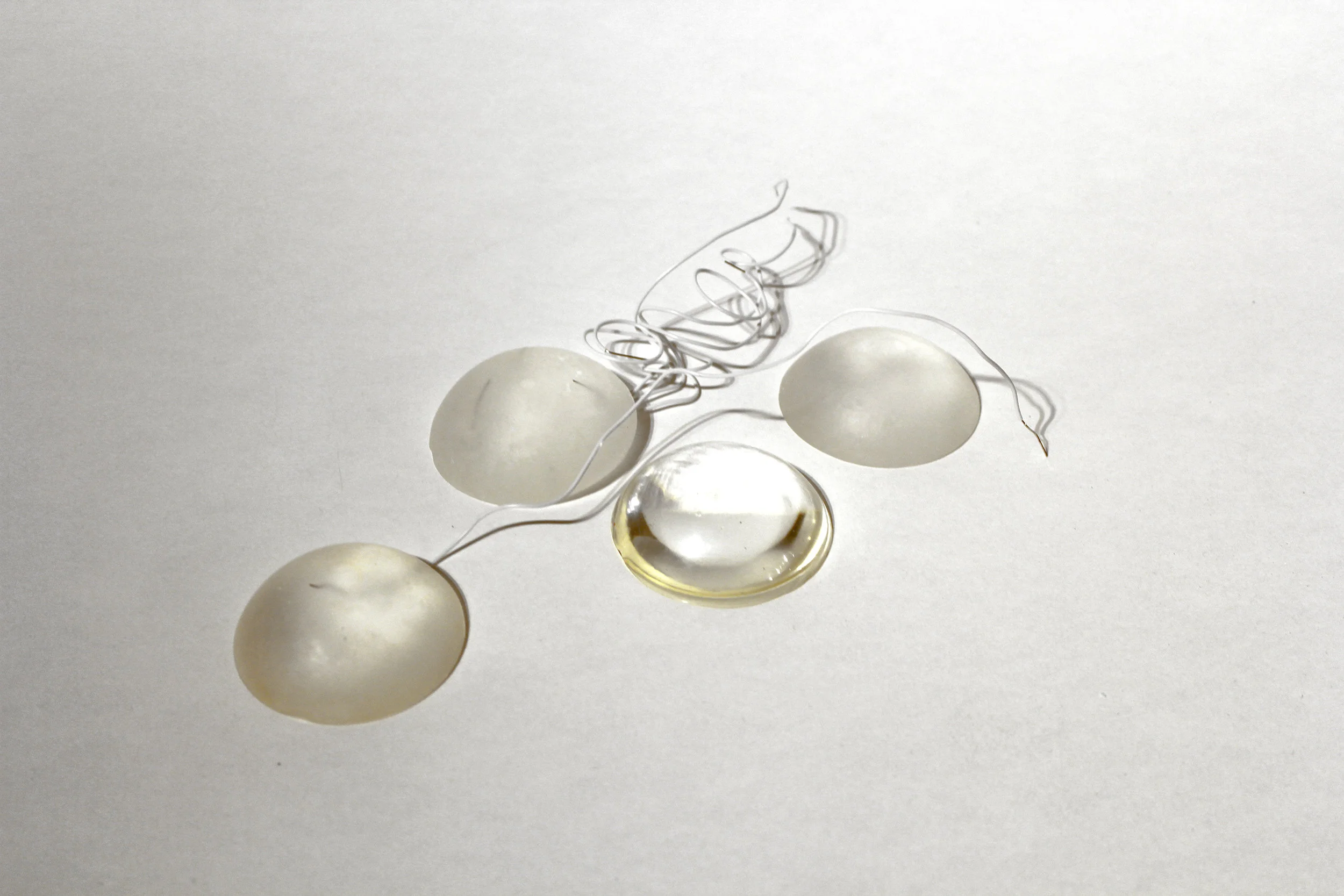
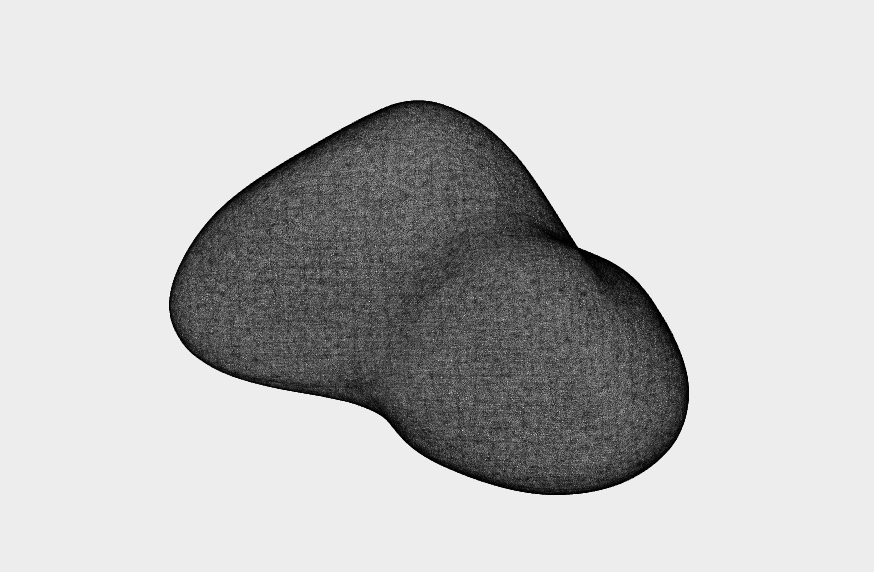
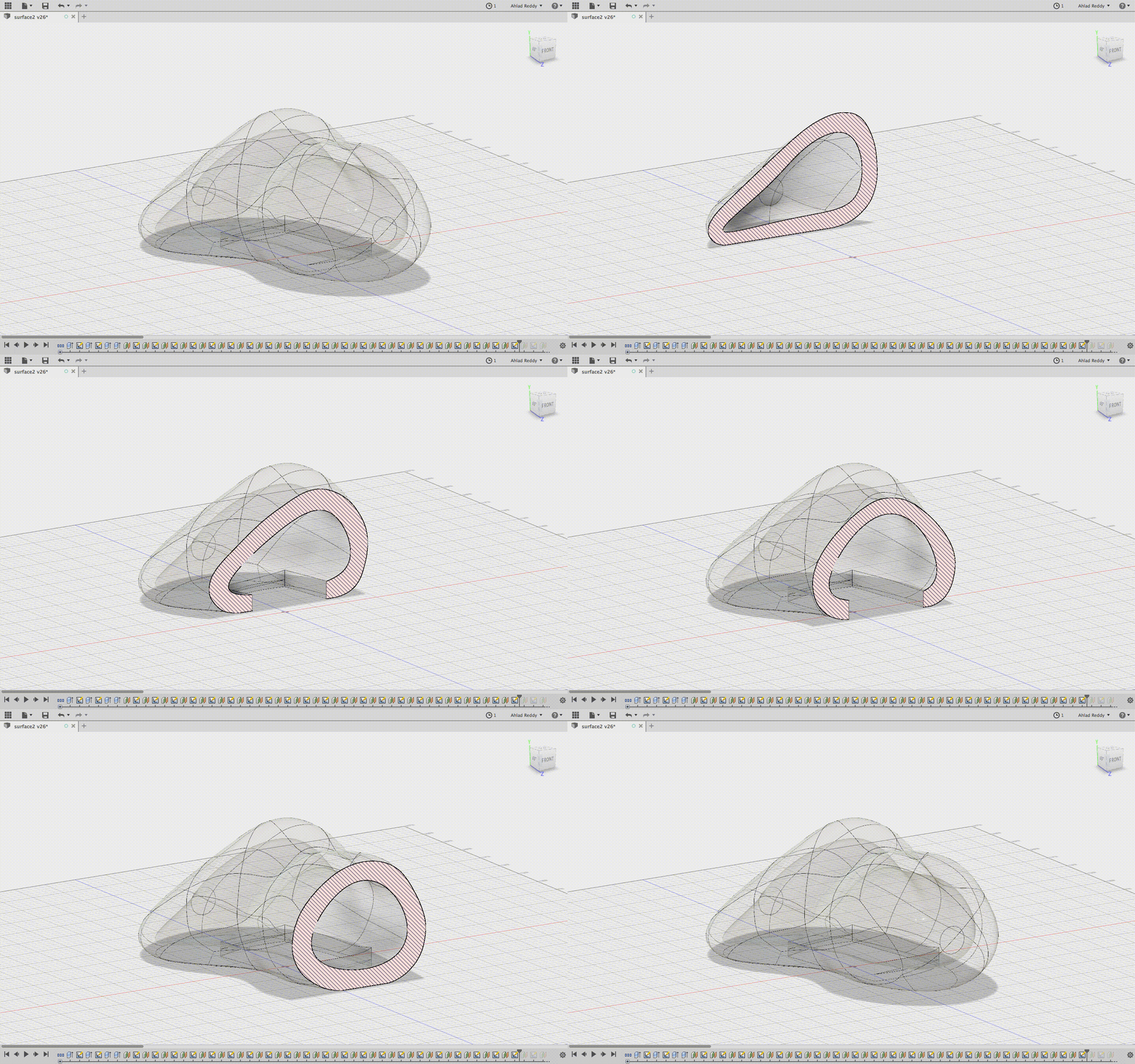
The form of the embryo was developed through many iterations of sketch work and foam models. The goal was to create a form that felt innocent, inviting, and organic. Epoxy resin was chosen for the body because of its similarity to glass, giving it excellent visual properties, a nice weightiness to its volume, and a pleasing, tactile surface. The final foam iteration was 3D scanned and 3D printed in two halves. Each half was silicone molded in two parts, then cast in epoxy resin, and finally attached together with epoxy resin.




Lessons for the Future
Now, more than ever, the way we treat technology reflects in the way technology treats us. Do we continue down a path of fear, of exploitation, of black boxes, of the invisible? Or do we shape a different future that is more humane, symbiotic, emotional, and physical? A future that is more hopeful. This work is about asking ourselves how we want to grow and nurture this technology that we’ve become parents to, as we consider the magnitude of what is to come.